Pages
With a weekly air freight service to Nairobi and Mombasa and dedicated customer service, you cannot go wrong with us. Nairobi and Mombasa are our two major destinations. We understand the plight of shipping, and that’s why we have gone to great lengths to smoothen your air cargo shipping from the UK to Kenya. Go straight to our online shop and place your order.
By shipping with us, you will get the following;
- A dedicated customer service
- An efficient service to Kenya
- A competitive price
Duration : 5 - 7 days
Air cargo prices to Kenya Starts at £9.99/KG + £25 handling charge, minimum of 10KG, if you have less than that , why not contact us now for a quote.
The team of Master Digital Services trading as MDS Cargo understands the trust our customers and transporters showcase upon us and we have framed high standards of information privacy for securing the information you provide to us. Hereby, we insist you to read the information gathering and dissemination practices adopted by us.
- Collection Of Personal Information: - When any individual navigate our website we grab the browsing information in order to help you surf better according to your requirement so that you have a safe, effective, smooth and customized experience of our website. While helping you we capture personal information that is necessary for all the above stated factors. It is likely that you browse our website as an anonymous individual and once you revealed your identity we store your personal information in a highly secured database. If we engage in any sort of merger or acquisition then also we will ensure the confidentiality of the information we possess of different individuals. We will give prior notice to the users before transferring the collected information under different privacy policy.
Types of data we hold
Cookies:
We use cookies and services from other organizations (statcounter.com) to collect standard information on logs and behaviour of visitors on all our websites. This information is collected only to understand what our customers / visitors want and to be able to serve them better without intrusion into their privacy.
Please see updated list of cookies below, you may wish to select and save according to how cookies from our site will apply to :
Email:
We collect email data during registration for the sole purpose of keeping you informed on our services , we do not share your email with any other organization and your email is stored on our secured server and used only for the purpose of customer relations with our customers. As a visitor or customer on our website, you are not obliged to opt into our mailing list , a customer should contact us immedaitely by email or phone if any of our email sent to a customer appears to be unsolicited.
Access to customer data
Customers can choose to amend or delete their details we hold at anytime, they can do this by logging into their account and clicking on edit. If a customer wishes Master Digital Services Ltd to ammend their details on their behaf, they can write to
- Security Precautions: - We have adopted stringent strategies to protect the information from misuse, alteration, and loss of it. We have provided our users with secure server that help them in using the website in a secure server and through which they can alter the information given to us. We adhere to our policies and have adopted each and every required strategy to protect the information from unauthorized use of it.
- Google Analytics: - We rigorously use Google Analytics and have implemented display advertising through it and an individual can opt out Google Analytics using the ads preferences. Third Party vendors have been contacted like Google to showcase our advertisements across the Internet. We have also third party cookies that help us in displaying the advertisements by analyzing the past visit of an individual on our website in this regard we use Statcounter.com
- Your Consent: - By using our Website and providing the information you consent to the collection and use of the information according to our privacy policy mentioned on this page. If we are in any stage of amending the privacy policy then we will update about the same on this page so it is recommended to visit the page on a frequent basis to get updated.
We understand the importance of gaining the trust of our transporters and customers and therefore we have maintained a transparency between you and the privacy policy adopted by us so that we can have a smooth business relationship without any disputes on this front in near future.
Comment And Feedback:
If you feel this information does not secure your privacy, please do not register on this website as a user, contact us first to discuss your reservations and we are always willing to listen and explain. Send email to This email address is being protected from spambots. You need JavaScript enabled to view it. or call +44(0)7984935042
What is the container groupage and cost to Nigeria?
Container groupage is the act of purchasing a shipping space in a 20ft or 40ft container ranging from 1 CBM, 5 feet, 10 feet , 15 feet and up to 20 feet space . Cost will usually start at £300/CBM, this will include customs clearance and all documentations for the shipment taken care of by the freight forwarder.
Commercial freight to Nigeria and other West African countries from the UK and EU is where we are specialised and can help any type of business. Here we have offered very affordable stress free and cheap cargo groupage options. Groupage is the method of buying a cargo space with other companies or individuals and transporting the goods together to a port or destination. As a small or medium size business owner, freight charge takes up a large chunk of your business cost which will normally cut into your profit, cashflow and present you with serious challenges in trying to compete with your competitors. Using groupage for your import and export is cheaper and allows you to hands off the headache that comes with import and export knowing fully well that your freight forwarder is in control and will deliver to you promptly. Be sure that your proof of export for your VAT refund from your supplier will be taken care of by us if any is required.
Here you can enquire or book container spaces ranging from 5ft space to 20ft space from our groupage options, once you are sure that your goods will fit any of the groupage spaces offered below, please use the Book Now button below to book your freight . We will contact you back within 24hrs.
We provide services from UK to Nigeria, EU to Nigeria and UK to Ghana. Please see sea FAQ at the bottom .
|
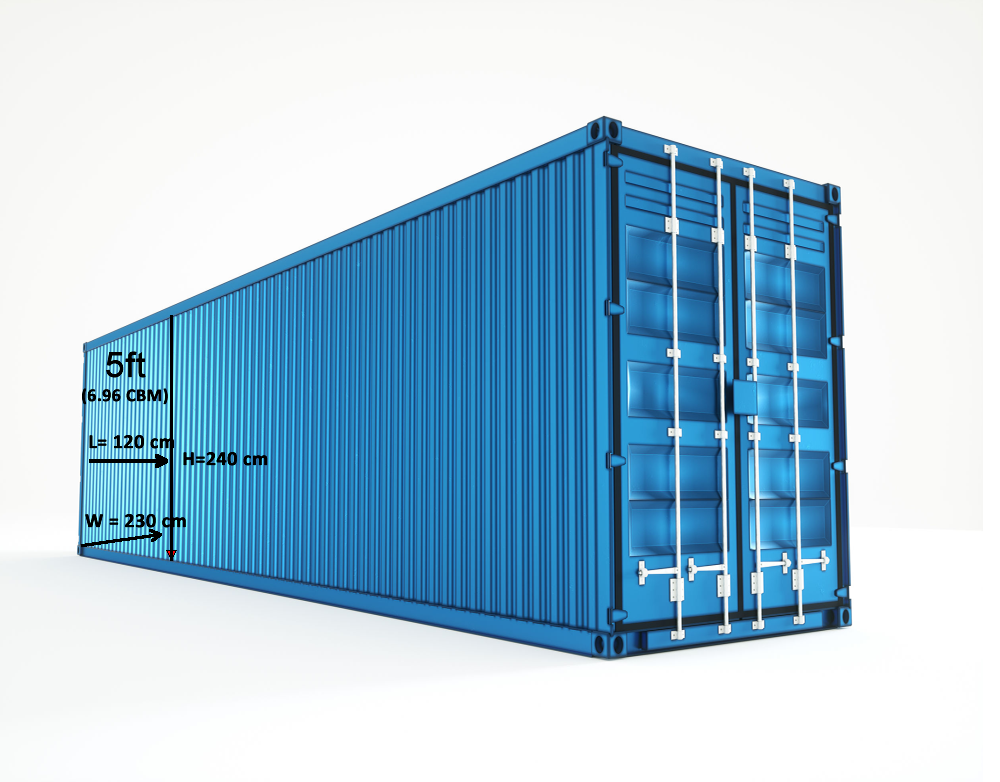
Available Space : 5 Feet Space (5ft) Dimensions : 121 x 230 x 240 (cm) CBM : 6.96 CBM
Estimated Price £ | € Warehouse to warehouse UK: £400/CBM EU: €450/CBM
Loading Date Between 14th and 30th of every month
|
5 Feet Space (5ft)
|
|
Available Space : 10 Feet Space (10ft) Dimensions : 242 x 230 x 240 (cm) CBM : 13.9 CBM
Estimated Price £ | € Warehouse to warehouse UK: £380/CBM EU: €420/CBM Loading Date Between 14th and 30th of every month
|
10 Feet Space (10ft)
|
|
Available Space : 15 Feet Space (15ft) Dimensions : 363 x 230 x 240 (cm) CBM : 20.9 CBM
Estimated Price £ | € Warehouse to warehouse UK: £320/CBM EU: €380/CBM Loading Date Between 14th and 30th of every month
|
15 Feet Space (15ft)
|
|
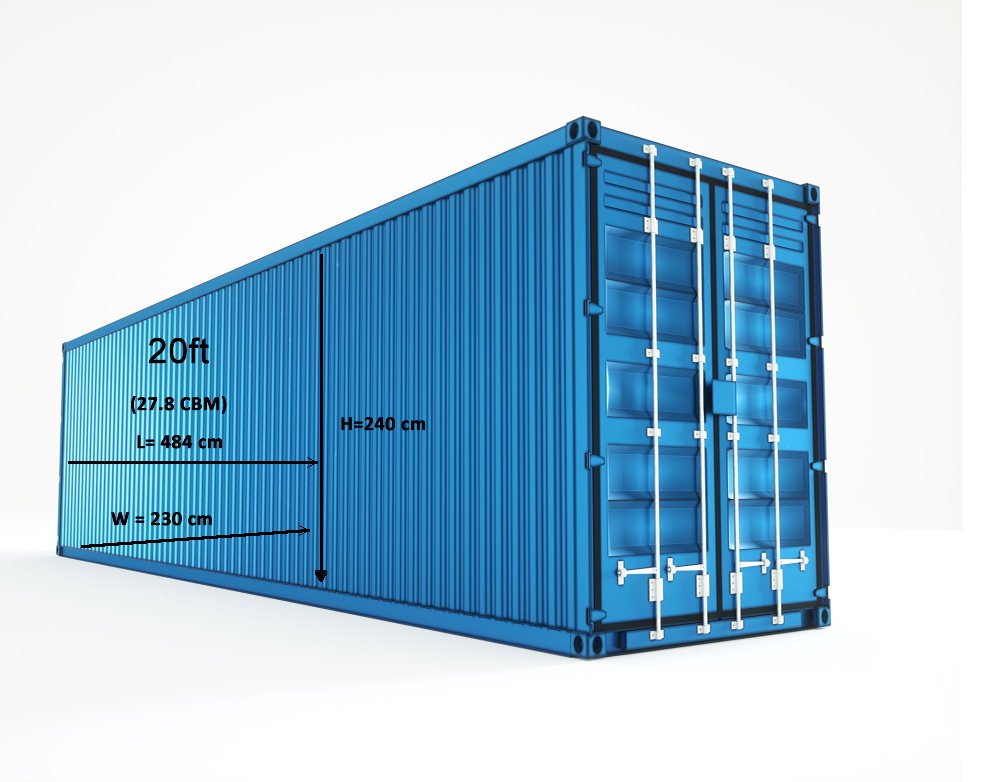
Available Space : 20 Feet Space (20ft) Dimensions : 484 x 230 x 240 (cm) CBM : 27.8 CBM
Estimated Price £ | € Warehouse to warehouse UK: £290/CBM EU: €310/CBM Loading Date Between 14th and 30th of every month
|
20 Feet Space (20 ft)
|


Groupage FAQ
I dont know what space my goods will fit into?
Send us a message or call us on the phone and we will work that out for you. A supplier's dimensions or pictures will help us work this out for you, most suppliers will provide you the dimensions and CBM of the goods.
Do you have any space option lower than what you are offering here?
Unfortunately we only have the spaces available here, this service is strictly for businesses that import in bulk and is interested in low cost fast groupage shipping . But yes we have other services that offer space for pallets, boxes and other smaller options. Click here to visit the page.
Is your price accurate and does it include transportation from the supplier to our warehouse before shipment?
Most of our prices based on our warehouse in UK or EU to our warehouse in destination, but don't panick, most of the time your supplier may offer to drop this off for you for a cheaper amount than using a third party but you need to ask first. For Ex works goods , we can still collect this from all over UK and EU to our warehouses in the UK and EU for shipment. We work with a wide range of partners in these areas to get the job done quickly and efficiently.
Can you provide proof of export to our supplier for our VAT purpose?
Sure we can, we need to have your commercial invoice before the goods are collected or delivered by your supplier.
Is clearance inclusive ?
Yes, price includes clearance but there may be extra cost to some type of goods, this will be informed to you on booking.
| UK Delivery Address: | EU Delivery Address: |
|
Your Name C/O MDS Cargo +447984935042 |
B& G Logistics Vlothavenweg 10 C/O Utche Global Services (2nd Yard) +31684792885 |
Note: With no prior notice or discussion of intended delivery with MDS Cargo, the delivery may be rejected at customer's cost.
Also Visit Air Freight | Sea Cargo to Nigeria | Sea Cargo to Ghana|

The United Kingdom (UK), with its robust economy, diverse market, and rich cultural tapestry, offers a plethora of business opportunities for expatriates looking to carve out a niche for themselves. From vibrant cities like London and Manchester to emerging urban centers, the UK provides a fertile ground for various sectors. This article explores some promising business opportunities specifically tailored for expatriates.
1. Technology and Digital Services
The UK's technology sector is booming, with London often referred to as Europe’s tech capital. For expatriates with expertise in software development, cybersecurity, or digital marketing, there exist vast opportunities to start or join tech firms. The rise of startups in the fintech, health tech, and edtech industries presents an ideal landscape for those with innovative ideas. Expatriates can leverage their diverse cultural insights to develop products and services that meet the needs of both local and international markets.
2. Import and Export Businesses
Given the UK’s global trading status, expats can find lucrative opportunities in the import and export sector. With a unique understanding of foreign markets, expatriates can bridge the gap between manufacturers in their home countries and British consumers. Whether it’s artisan goods, food and beverages, or technology products, there are opportunities to create businesses that enhance the availability of international goods in the UK.
3. Tourism and Hospitality
The UK remains a top travel destination, attracting millions of tourists annually. Expatriates can capitalize on this by establishing businesses in the tourism and hospitality sector. This can include tour guide services, boutique hotels, or unique dining experiences that showcase international cuisine. With the growing trend of experiential travel, businesses that offer authentic cultural experiences are poised for success.
4. Health and Wellness Industry
The health and wellness industry has seen significant growth in recent years, making it an appealing sector for expats. This can involve opening wellness centers, fitness studios, or providing holistic therapies. Additionally, expats with a background in nutrition or mental health can offer consultancy services or run workshops and retreats that focus on well-being. The increasing focus on health makes this a ripe opportunity for those with the right credentials and passion.
5. Sustainable and Eco-friendly Solutions
With an increasing number of consumers prioritizing sustainability, expatriates can dive into green business ventures. Options such as eco-consultancy firms, sustainable product lines, or renewable energy solutions can resonate well in a market keen on reducing its carbon footprint. Expats can use their unique perspectives to introduce innovative sustainable practices and products, appealing to conscientious consumers.
6. E-commerce and Online Retail
The e-commerce boom has transformed how people shop in the UK and around the world. Expatriates can take advantage of this trend by launching online retail businesses that offer niche products, whether they’re handmade crafts, clothing, or specialty foods that reflect their cultural heritage. With the right marketing strategies, an understanding of local regulations, and a solid logistics framework, this can be a profitable venture.
if you re an expatriates considering business opportunities in the UK, the landscape is filled with potential. By leveraging their unique skills, cultural knowledge, and insights, expatriates can successfully navigate the competitive market and establish thriving businesses. Whether in technology, tourism, health, or sustainability, the commitment and creativity of expats can lead to meaningful contributions to the UK economy while fulfilling entrepreneurial aspirations. With proper planning and adaptability, there’s no limit to what an expatriate can achieve in this diverse and dynamic business environment.

Nigeria, often referred to as the giant of Africa, is a country teeming with potential and burgeoning business opportunities. With its vast resources, youthful population, and strategic location, Nigeria presents a fertile ground for entrepreneurs and investors looking to carve out a niche in various sectors. This article delves into some of the most promising business opportunities in Nigeria.
1. Agriculture
Agriculture remains one of the most significant sectors in Nigeria and very much underdeveloped , offering immense opportunities for innovation and investment. With a population exceeding 200 million, the demand for food is insatiable. Businesses focusing on crop production, livestock rearing, and agro-processing have a strong chance of success. Moreover, the Nigerian government is actively promoting initiatives to enhance food security and reduce import dependency, making this sector even more attractive. Entrepreneurs can explore organic farming, export of agricultural products, and the development of agro-technologies to create sustainable business models.
2. Information Technology
The tech ecosystem in Nigeria is rapidly evolving with serious innovations in the FINTECh sector, thanks to a growing number of tech hubs and a vibrant startup culture. With a significant percentage of the Nigerian population now connected to the internet, there is an increasing demand for digital services. Opportunities abound in areas such as software development, mobile applications, e-commerce, and cybersecurity. In particular, fintech has gained substantial traction as many Nigerians seek efficient banking solutions. The rise of digital currencies and payment systems presents lucrative ventures within this space with leaders like Paystack, flutterwave and so on.
3. Renewable Energy
As Nigeria grapples with inadequate electricity supply, renewable energy presents an exciting business opportunity. The country is blessed with abundant solar, wind, and hydroelectric resources, making it an ideal candidate for renewable energy solutions. Companies that can provide affordable and sustainable energy solutions, such as solar panels or mini-grids for rural communities, are likely to thrive. The Nigerian government has shown interest in diversifying energy sources, thereby creating a conducive environment for investment in this sector. In fact, most Nigerians believe that once the energy needs of Nigeria has been sorted, there would be a great leap in economic developement
Subcategories
Transport, Delivery Article Count: 11
Sea Cargo Packaging
 Packaging for our Sea Freight could be in any form including pallets, bags, boxes. Europe Sea Freight Packaging Recommendation We recommend that all EU Sea freights goods should be palletized before...
Sea Cargo FAQ
 Do you want to ship in bulk? Do you want cheap shipment? Do you want dedicated customer services? Do you want a fast shipment? If you have answered yes to the above questions, then you are in the...
UK to Nigeria Car Shipment
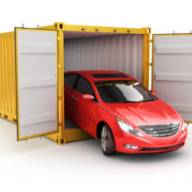 Want to ensure safe car shipping to Nigeria from the UK? Come in and use our container car shipment to Nigeria. With our containers leaving twice monthly to Nigeria, rest assured that we will meet...

 Instant live Chat